The Young Scholar
Program
FAQs
What are the benefits of the Young Scholar Program?
This program
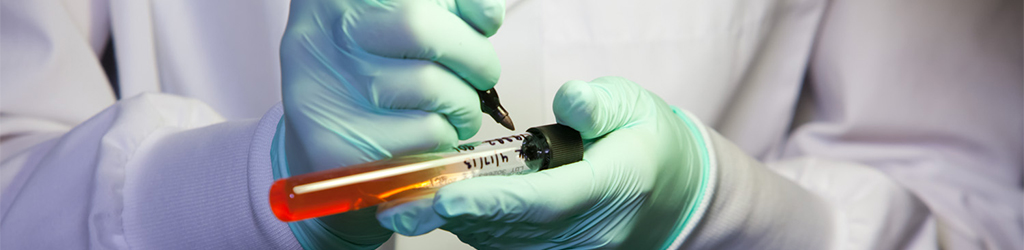
gives you the opportunity to work in a simulated clinical laboratory
setting under the guidance
of certified
professionals. By participating in the Young Scholar Program,
you will earn college credits that can be applied directly to your transcript,
either at Marquette or wherever you choose to attend college.
Parents of participating students are invited to attend a one-hour seminar at the beginning of the program that will explain diagnostic medicine and the role of the clinical laboratory scientist in the health care arena.
How do I know the Young Scholar Program is for me?
- Are you a high school junior or senior?
- Are you interested in science?
- Are you considering a career in laboratory medicine?
- Do you want to earn college credit while still in high school?
- Can you invest three Saturdays to learn how clinical laboratories
fit in the healthcare picture?
If
you answered yes to these questions, you belong in Marquette's
Young Scholar Program.
When and where is the Young Scholar Program offered?
The Young Scholar Program at
Marquette University is offered in the fall
semester only. Contact our office for current course offerings at
(414) 288-7566 or via e-mail.
Who teaches the Young Scholar Program?
All lecture sections of the Young Scholar Program are taught by certified laboratory professionals.
Clinical laboratory science students and Marquette University alumni assist in the laboratory exercises.
Where is the program held?

The Young Scholar Program is taught by
clinical laboratory science faculty utilizing
the department's teaching laboratories, housed in the Walter
Schroeder Health Science and Education Complex. These laboratories,
designed to simulate the hospital laboratory, include approximately
3,400 square
feet of space, which is wheelchair accessible.
Lab sections typically
have no more than 12 students, maximizing individualized instruction
and hands-on experience with state-of-the-art diagnostic instrumentation.
The department follows OSHA guidelines
in implementing safety regulations for students, further simulating
the clinical laboratory. Whenever
possible, mock patient specimens are used to further avoid safety
risks.