
Hope is a Four Letter Word
Web Posted: September 14, 2004
Like many four letter words, the word “hope” can startle us. Consider
for a moment the opposite of “hope”---hopelessness. When someone
feels hopelessness or something seems hopeless, it seems there is no way out,
no way for healing or forgiveness, for redemption, or for possibilities to
occur. As human beings we sometimes need to be startled to recognize that there
is hope and possibility where it seems there is none.
So what brings “hope” to
our lives?
The prophet Jeremiah foretells: “I know the plans I have
for you, says the Lord…to give you a future and a hope. When you
search for me, you will find me; if you seek me with all of your heart,
I will let
you find me,
says the Lord” (Jeremiah 29: 11-14).
God’s plan for each of
us is one of hope…of possibility. The Christian
message abounds with messages of hope as Jesus heals, forgives, and shows
mercy and compassion.
A few days ago some students were talking in a class
about the idea of “vocation” and
one of them proclaimed, “I don’t think a vocation is a
destination…it
is the journey.” Our vocation as Christians and believers is
the journey of walking through life knowing that our God is a companion
who
brings hope
to our experience and who has hopes for us.
Hope is something we can
have…but it is also something we bring to others
with our care and concern. This Mission Week is a reminder to all
of us at Marquette that as a community we are able to bring hope
not only
to each other
but to the Milwaukee community and far beyond when we use our gifts
and talents in service of others.
Cedric Jennings, the young man whose
story is told in A Hope in the Unseen (this year’s common
text for all first-year students), recalls his teacher’s
comment that, “The substance of faith is a hope in the unseen.” In
the text, Cedric explains that he used to think about the “unseen” as
a place…a place he “could not see up ahead” but
a place he would reach eventually. He later realized he needed
to accept who he was and
see himself more clearly His teacher affirmed that insight saying, “The
unseen may be a place in your heart.”
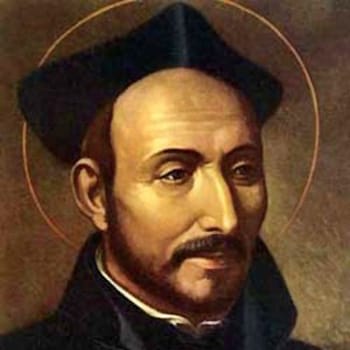
One of the gifts St.
Ignatius offers us is a way to delve into “the deepest
desires of our hearts” to know how God’s spirit is
calling me to live my life, to have hope, to be more loving,
and to bring hope to others.
By learning to listen more clearly we will hear the words of
hope in the fabric of our lives.
Theologians Evelyn and James
Whitehead challenge us to see our
Christian vocation as fulfilling “God’s dream” for
our lives. “Christian
maturing requires the interaction of dreams: our personal hopes
in dialogue and in tension with the community’s dreams
and hopes,” they write.
What do my hopes have to do with
building the kingdom of God?