ABOUT OUR OFFICE
ABOUT OUR OFFICE
MARQUETTE'S MISSION
PROGRAMS AND EVENTS
GRANTS
MISSION WEEK
MISSION REFLECTIONS
MISSION AND ACADEMICS
CONTACT US
BACK TO HOME


Engaging and Embracing Exploration: A Commencement Address

By Phillip C. Naylor, Ph.D., Department of History
December 15, 2002

Reverend Father Wild, Provost Wake, Members of the Board of Trustees, Marquette faculty and administrator colleagues, parents, friends and, especially, graduates of this great university, today we celebrate; today we commemorate. For me, it is a particular privilege to Naylorparticipate and to inaugurate a tradition concerning future mid-year graduations, i.e., having faculty members as commencement speakers. It is an honor appreciated by the faculty and certainly by me. Thank you, Father Wild, for your initiative.

In Father Wild's invitation to me to speak at graduation, he recommended a short address. He didn't have to say it. I know it's Sunday and that this season's National Football League games are more exciting than ever given the upcoming playoffs. But I don't care about that. You see, let me testify. Let me confess. I am a Chicago Bears fan...and, as you know, the Bears didn't play in the NFL this year! Yes, I am in denial. But unlike other Bear fans, I do wish the Packers well.

Today the Greek Orthodox Church commemorates the feast day of St. Elef(eu)therios. Now in Greek, eleftheria means freedom. The degree that you will be receiving may signify to you liberation from the stress of syllabi, the pressure of papers, the trauma of tests--the so-called completion of your education.

As a Marquette graduate myself, who attended my mid-year commencement, let me suggest, that your degree should represent more than the narrow pursuit of a career, the acquisition of a position that ensures profit and comfort.

If you have studied conscientiously and if we have taught with purpose and passion, then you may have discerned the genuine meaning of a Marquette degree. You see it isn't over today; it is just beginning. As a friend in graduate school once told me, a degree is a means rather than an end.

Understand that, yes, your degree releases you from the rigors of coursework, but it also enhances your freedom with opportunities and choices. The most important choice that I hope you take, the choice that I believe you must make in order to have a fulfilling life, the choice that best illustrates the meaning of a Marquette degree is now up to you.

That choice was made by Father Jacques Marquette over 300 years ago. The choice to explore oneself and the world.

We have fitted you; we have prepared you for this exploration. We have partially mapped your course and at least have pointed out directions. Some of us have served as guides and taken a few steps with you on your individual paths of discovery. How? I remember Father Walter Stohrer's comments in a College of Arts and Sciences video. He said that he felt he had succeeded, if his students left his courses not with answers but with questions, questions that incite continued exploration.

Exploration is the essence of this university's praxis. It's what we do here from laboratory experimentation to literary exposition. We deal with inquiry and imagination--the inherent characteristics of exploration. Exploration is the foundation of our mission statement that extols excellence, faith, leadership, and service.

Excellence just doesn't happen; it must be sought. It must be discovered inwardly and outwardly. It must be explored, as referred by our mission statement, by the heart as well as by the mind. This means exploring what you've got inside of you--your guts, your spirit. The explorer takes calculated rather than reckless risks. Nevertheless, the explorer still relentlessly lives dreams and confronts fears and transcends. Remember, Bruce Springsteen's heroes in his early albums--lonely riders sustained by hopeless loves--or the grim and gripping grace of Robert Johnson's Delta Blues that described the dread of being hunted by "hellhounds" or being caught at the "crossroads" while risking breaking Jim Crow curfews. Recall the redemptive quests resonating in the poetry of Dante and Dylan and in the music of Hildegaard of Bingen and Patti Smith of New York City.

Think of the words of Hazrat Inayat Khan, an early twentieth century musician and sufi (a Muslim mystic), regarding exploration and faith: "A real seeker, one who is not false to himself, will always meet with the truth, with the real, because it is his own real faith, his own sincerity in earnest seeking that will become his torch."1 Exploring, searching is struggle. Think of the leaps of faith by Augustine in his anxious search for spiritual satisfaction and certainty. Whether if you are a theist, an agnostic, an atheist, this university, your university, insists on studying the complex dynamics and dimensions of the human being--the intangibles as well as the tangibles--religion and reason, the spiritual as well as the secular. Immanuel Kant understood this as the phenomenal and noumenal worlds. Many explorers choose to follow paths similar to those of Nikos Kazantzakis, the great twentieth century Greek writer from the island of Crete, whose search for God led him to a realization influenced by his love of Christ and Buddha--the need to transubstantiate flesh into spirit. Indeed, it is becoming increasingly evident that spiritual as well as secular initiatives must serve as the means toward achieving global resolution and reconciliation.

Jalal al-Din al-Rumi of the 13th century, Islam's most renowned sufi, spoke of a complementary personal exploration in his poem "Only Breath":

There is a way between voice and presence
Where information flows.

In discipline silence it opens.
With wandering talk it closes."2

And Lou Reed while with the Velvet Underground: "In between thought and expression lies a lifetime."3 Explore the in-betweeness in life--the resonance of silence--and you may break through and discover another facet of consciousness with your "torch," your light. This is all part of the exploration of self.

At Marquette we invite you to "be the difference." But to be the difference, you must be different. Remember Robert Frost taking the "road less travelled by," and he reflected, "and that has made all the difference."4 An explorer chooses to be different by constantly, conscientiously, and courageously engaging the inner world of the self while embracing the outer world of the other. Emerging from this dual pursuit--from this complementary exploration is leadership and with leadership comes a profound responsibility--to guide others, to serve others.

The United States is the hegemon of the world--the dominant state. We exercise power internationally in traditional ways by political and military means and in newer non-traditional transnational ways by media, economic organizations and corporations, and the internet. And as Americans, we find ourselves despised throughout the world and we wonder why? It is because as a nation, as a people, we have failed to explore the languages, cultures, histories, and conditions of others. Our media has not helped but mummified our collective national consciousness by entertaining rather than enlightening us. It is much more profitable in the short-run for media companies and their advertisers, but in time it will impoverish us as a people spiritually as well as materially. Springsteen was right ten years ago when flipping his remote's keys--"57 Channels (And Nothin' On)"5 --except bewildered or outrageous and angry talking heads. They're not helping.

Who will then? Explorers will. Explorers who understand, for example, Martin Heidegger's remark that "language is the house of being." The New York Times reported that there were nine Arabic majors that graduated in the year 2000.6 Are you getting the picture? Jesuit fathers have throughout their history--Francis Xavier in India and Japan in the 16th century and Matteo Ricci in China in the 16th and 17th centuries. They understood the importance of language and cultural sensibility in social service as well as in religious mission. They understood to serve others you must know others.

Today, to win the War on Terrorism, there must be a complementary campaign--a campaign of knowledge, an epistemological enterprise, simply an exploration. How do we receive and percieve others? How do others receive and perceive us? What do we know? What do they know? Hey, where do they live? The latter a telling question given the recent dismal results of Americans taking a National Geographic Society exam.7 We have to reorder priorities and promote a new age of exploration. We need a revolution of global consciousness. We need to become aware. We need to wake up. This is imperative for Americans.

The events of 11 September 2001 were not only the result of extremists but also the consequence of our carelessness, our own ignorance--a lack of exploration and a lack of service and of justice, a lack of global consciousness. As long as we perpetuate stereotypes, merely shrug at bigotry, dismiss histories, the War on Terrorism will persist painfully and profoundly. As Rumi penned: "Ignorance is God's prison/Knowing is God's palace."

There is a need for exploration today, for encounter and interaction--a transcultural awareness. We have so much to offer so much to serve as individuals and as a people, certainly our wealth and ideals, but most of all our selves. We need to integrate our humanity with that of the world.

Imagine this: we have the power to provide potable water for millions, medication for HIV and AIDs victims, food for refugees, financial aid for struggling peoples and their institutions. But our material efforts and endeavors will mean little--even if done in the name of justice--if we do not understand and genuinely care about those whom we are trying to help. From a Marquette perspective, how can we authentically pursue cura personalis--care for the total person--when we don't even know that person?

Explore the contributions of others to world history, to our history. Start by recognizing others' presence in the world--their dignity--not only because this is a pragmatic means to win the War on Terrorism, but because it also involves genuine justice. For that matter, recognize and respect the diversity, the difference in this country. Given American power and position at this time in human history, the world is our responsibility--a world of justice is our responsibility, a historic opportunity to share, not impose, the best of our ideals and values. But first we must discover and understand this world before we give it dedicated commitment. Yet we cannot wait long and lose this chance. We must act. We must explore.

Insist on the intensive acquisition of knowledge not only for yourself, but for others' explorations. You see we need explorers in every profession, career, home--explorers who lead and who serve, explorers instilled and inspired by the need to assert compassion and charity and simply to affirm humanity. Rumi reminds: "Instead of being so bound up with everyone, be everyone."8

And there are explorers. The intangible yet very real presence of one particular explorer is here today. Terrance Spencer, an associate minister of Canaan Missionary Baptist Church, would have been sitting here anticipating a Master's in New Testament Studies. He epitomized the explorer. He sought excellence, was strengthened by faith, was a leader in his community, and served others by trying to end the violence that randomly and tragically targeted his own life. Today, this man joins you as a graduate and offers to you an inspiration of exemplary exploration.

Hazrat Khuaja, another sufi, composed the words which I believe can be identified with Reverend Spencer and other explorers:

Love all and hate none.
Mere talk of peace will avail you naught.
Mere talk of God and religion will not take you far.
Be a blazing fire of truth,
Be a beauteous blossom of love
And be a salving balm of peace.
With your spiritual light, dispel the darkness of ignorance;
Dissolve the clouds of discord and war
And spread goodwill, peace, and harmony among the people.

This is your mission, to serve the people...
Carry it out dutifully and courageously....9

It is this exploration of the self and of the world that we commend to you as your university. Remember that exploration can be pursued in so many different ways--as illustrated by Marquette's own Professor Judy Mayotte's public advocacies on behalf of the world's refugees or by the courageous commitments to social justice and peace by Archivist Philip Runkel, a most compatible curator of the Dorothy Day papers. Exploration can occur in the seclusion of the rooms of recluses like Marcel Proust, Franz Kafka, Hermann Hesse, and so many others, whose words stir our minds. It is your path, your project, your exploration. And today you're more than ready to make that choice to embark on your adventure. We need explorers. We need you. The world needs your imagination, your compassion, your sense of justice, your love.

Thus, we celebrate today the search and the struggle, the excitement and exhilaration of exploration that enhances and enriches life that I hope you engage through your unique being. To paraphrase Seamus Heaney, try to discover ways that rhyme your heart with your mind. You may find that occasional transcendental synergy of heart and mind. And those moments inspire life for an eternity. Explore the components that make up your self. Assert your individuality--but do this in a way that will also benefit others. Please be patient in your searches. It may take you years to discover--to fulfill a search. Remember the value of the search is the willingness to explore--the testing, the trying, the occasional epiphanic triumph through a realization that moves your guts/spirit. I hope you discover along your challenging way good times, good friends, good teachers, good spirits.

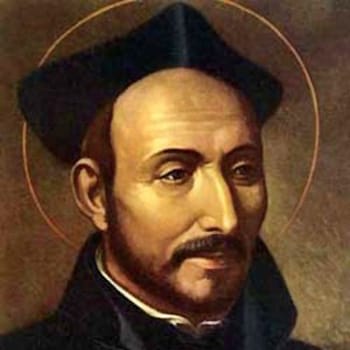
This university's "vision statement" speaks of the "transformational" nature of a Marquette education. Understand that your university urges you to keep transforming, renewing yourself through exploration. This does not mean being a social or cultural chameleon by conveniently reinventing yourself at expeditious moments. It means patiently exploring your own potential, your own being, in order to serve and transform others. Think of the spiritual and secular significance exemplified by Ignatius Loyola's personal exploration and transformation from materialist to mystic.

St. Paul wrote: "What counts is the new being."10 Today you are "new beings" or "different beings" compared to who you were when you first enrolled at Marquette. And we are counting on you, because we know you can do great work.

Congratulations. May God bless and guide your explorations.

Thank you.

Notes

1James Fadiman and Robert Frager, eds., Essential Sufism (Edison, New Jersey: Castle Books, 1998), 132.
2Jalal al-Din al-Rumi, The Essential Rumi, trans. Coleman Barks and others [Edison, New Jersey: Castle Books, 1997), 32.
3Lou Reed, "Some Kinda Love," in Between Thought and Expression: Selected Lyrics of Lou Reed (New York: Hyperion, 1991), 20.
4Robert Frost, "The Road Not Taken," www.robertfrost.org/indexgood.html.
5From The Human Touch (1992) album.
6Margaret Talbot, "Other Woes," New York Times Sunday Magazine, 18 November 2001. See also exchanges.state.gov/iew2001/reports/nonprofit-iiemedia4.htm.
7See Paul Recer, "Young Americans Flunk Geography, According to National Geographic Quiz Survey" (www.boston.com/news/daily/20/geography_survey.htm).
8Rumi, 28.
9Sufism, 140.
10Galatians 6:15.


Home Marquette Home
All Material © 2006 Marquette University.
P.O. Box 1881 - Milwaukee, WI USA - 53201-1881 - (414) 288-7250