
College of Arts & Sciencess History Department
PROGRAMS RESOURCES STAFF CAREERS ADVISORS ALUMNI
CHS HOME PAGE
Resources


Brain Dissection and Neuroscience:
Applications to Disorders of Language and Speech Functions

August 7 - 9, 2008

Course Description:
This course will provide training in neuroscience applied to higher mental functions and their disorders. Participants will gain an in-depth understanding of structural properties, sensorimotor systems, and neurolinguistic organization of the human brain. This learning will be supplemented by the guided brain dissections and neurological problem solving. Participants will also learn about the modern neuroradiological techniques, advances in neurological management of stroke and related syndromes, bioethical issues, neuropsychological concepts, and neurolinguistic implications of various neurosurgical techniques such as cortical mapping and deep brain stimulation. The faculty will be derived from the disciplines of Neurolinguistics, Neuroscience, Neurology, Neurosurgery, Neuropsychology, Neuroradiology and Law.

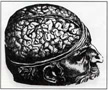
Brain - Lateral View

Lateral View

Brain - Ventral View

Ventral View

Brain - Dorsal View

Dorsal View

Brain - Midsagittal View

Midsagittal View

Who Should Attend?

Any health care professional interested in functional neuroscientific knowledge and its applications to the clinical management of higher mental functions in neurologically impaired individuals. This course and its advanced-intermediate level of presentation is best suited for those with interest in brain-behavior relationship and neurological correlates of higher mental functions.

Course Objectives
After completing this course, students should be able to:

  • Apply principles of neuroscience in the management of patients with neurological impairments;
  • Identify major external and internal anatomical structures of the brain and describe their functions;
  • Describe the circulatory systems of the brain and common types of vascular pathologies;
  • Discuss the functions of major sensorimotor pathways;
  • Explain the spinal and cortical organization and neuronal circuitries of the basal ganglia and cerebellum related to motor functions;
  • Discuss the neural mechanism of vision and audition in relation to communicative disorders;
  • Explain advances in the treatment of the syndromes of stroke, Alzheimer, and movement disorders;
  • Follow the neurolinguistic rationale underlying various neurosurgical techniques;
  • Discuss the importance of neuro-imaging;
  • Perform cranial nerves based examination of speech mechanism;
  • Integrate the principles of bioethics in clinical management;
  • Solve clinical problems using neurological principles and lesion localizing rules.


Course Faculty
Subhash C. Bhatnagar, Ph.D. (Neurolinguistics), CCC-SLP, is a Faculty member at Marquette University and teaches in the area of neurogenic disorders of communication. His research is involved with cortical and subcortical mapping of language functions in neurosurgical patients with intractable epilepsy and movement disorders. Course Director


Edward W. Carroll, Ph.D. (Anatomy) is a faculty member at Marquette University and teaches courses in anatomy and physiology. His research deals with gene related defects of the nervous system. Laboratory coordinator


William E. Cullinan, Ph.D. (Neuroscience) is a faculty member at Marquette and teaches courses in biomedical sciences. His research is in the neural circuitry mediating stress responses. Laboratory coordinator and Lecturer

Shekar N. Kurpad, M.D., Ph.D. is an Associate Professor of Neurosurgery at the Medical College of Wisconsin and the Chief of Neurosciences at the Clement J Zablocki VA Medical Center. His research interests are in malignant brain tumors, degenerative disease of the spine, tumors of the spine, spine trauma and skull base tumors, and minimally invasive methods for treatment of spinal disorders. Lecturer

Lotfi Hacein-Bey, M.D. is a Professor of Radiology and Neurosurgery and the Director of Diagnostic and Interventional Neuroradiology at Loyola University Medical Center in Chicago. His research interests are in the area of cerebrovascular diseases, cerebrovascular adaptation to ischemia, and aneurysms management Lecturer

Varun K. Saxena, M.D. is the medical director of the Center for Neurological Disorders, St. Lukexs Hospital, Milwaukee. His research and clinical interests are in cerebrovascular diseases and neuro-imaging. Lecturer


Robyn S Shapiro, J.D. is the Ursula Von der Ruhr Professor of Bioethics and the Director of the Center for the study of Bioethics at the Medical College of Wisconsin. Professor Shapiro is also a partner in the Health Law Practice Group of the Milwaukee law firm Michael, Best and Friedrich, LLP. Her research interests involve issues related to the impact of malpractice litigation on the physician-patient relationship, genetics, advance directives, treatment decision making and termination, and ethics in clinical research. Lecturer


Comments by past participants:

Arnold E. Aronson, Ph.D. Mayo Clinic, MN (2001)

Indispensable for instructors in neurogenic communicative disorders.....Remarkable concentration of encyclopedic material."

Shannon Liem (2007)                                                                         Tallahassee, FL

An absolutely outstanding way to marry the practical application and the theoretical knowledge base.  I had too many ‘a-hah’ moments to count!”

Amy Swier-Vosnos (2007)
Chicago, IL

Blunt dissection CHANGED MY PROFESSIONAL LIFE.”

Shannon Parnell (2007)                                                                       Clarksburg, MO

“This was the conference I’ve been waiting for!  (I loved it.)  It has been 12 years since I finished my masters.  I was ready for a review, plus so much more.  Thank you!”

Keri Winchester (2007)
Mesa, AZ

“Thank you for a hands on course that has both reinforced and clarified concepts.  I leave the course with improved perspective and as a better clinican.”

Roberta M. Roy (2007)
Port Henry, NY

“A course designed to demystify not only the outer cortex but the inner circuitry and brainstem function in relation to speech and language as well.”

Bedonna J. Honda (2007)
Orange, CA

“The high quality of both presenters and attendees far surpassed my expectations.  The clinical assistants were friendly and knowledgeable.  Thank you!”

“Personally, this experience triggered an unexpected awe and respect for the human body.”

Patricia Predum (2007)                                                                      
Mount Pleasant, MI

Courses like this empower the clinician in me.  It was great to have so much time spent of Neuroscience in such depth.  I’ve been a clinician for 16 years and this brought back the excitement I felt back in those early years of my profession.  Acknowledging the need for the neuroscience information for SLP’s in our day to day practice is critical but often overlooked.  Thanks for reminding me of the value of “Pathologist” in our title.  Congratulations on the success of this program.”

Susan Agard (2007)
Green Bay, WI

“This program was exceptional.  I will definitely use this information in my practice.  I received my money’s worth on the first day!  The next two days were gifts.  Thank you very much!”

Comments by 2006 participants

Program
Thursday, August 7, 2008

  • Morning Session
    Orientation and introduction
    External and internal brain anatomy, meninges, medullary centers, architectural organization, circulatory (CSF and Vascular) systems, and visual system
  • Lunch (included)
  • Afternoon Brain Dissection Session


Friday, August 8, 2008

  • Morning Session
    Neuroembryology, sensorimotor systems, cranial nerves, neurotransmitters, neural recovery, and stem cell research.
  • Lunch (included)
  • Afternoon Brain Dissection Session

Saturday, August 9, 2008

  • Morning Session
    Higher mental functions, neuro-imaging, neurolinguistic considerations of neurosurgical techniques, and treatment of stroke syndromes, bioethics, and neural restitution
  • Lunch (included)
  • Afternoon Brain Dissection Session
    Problem solving: Applying lesion localizing rules to clinical case studies.


General Information
Enrollment is limited to the first forty processed applications. You will receive a confirmation letter which will contain information about enrollment and additional details.

Registration Fees
$725 per person. The registration fee includes all breaks, lunches, all course materials including handouts, dissection tools, brains, aprons, and gloves. Bring clothes and shoes appropriate for dissection.


Add $75 if you desire to receive a copy of the text, Neuroscience for the Study of Communicative Disorders by Bhatnagar, Lippincott, Williams and Wilkins, 2008.


Accreditation
Organized by the Department of Speech Pathology & Audiology Professional Association at Marquette University, this course is co-sponsored by Wisconsin Speech-Language Pathology and Audiology Professional Association.

ASHA Logo

The Wisconsin Speech-Language Pathology and Audiology Professional Association  is approved by the Continuing Education Board of the American Speech-Language-Hearing Association (ASHA) to provide continuing education activities in speech-language pathology and audiology. This program is offered for 2.7 CEUs (Advanced level; Basic Communication Process area). ASHA CE Provider approval does not imply endorsement of course content, specific products, or clinical procedures.


Accommodations
Basic student housing on the MU campus is available in Straz Tower($44 for single and $60 for double accommodation). To reserve a room contact the housing office at 414-288-7208.

A block of rooms has been reserved at the Ambassador Hotel for $109.00 (single/double) a day; 888-322-3326 or guestservices@ambassadormilwaukee.com. July 1 is cut-off date for these rate.


Location/Parking
Morning lectures will be held in Cramer Hall 104J. Afternoon sessions will be held in the Dissection Laboratory. Parking is available in structure #1. The entrance is located on 16th street just north of Wisconsin Avenue. Please call Parking Services at 414-288-6911 for additional information.


Substitutions/Refunds
If you cannot attend, call to substitute another person. If you must withdraw, a full refund (minus a $100 administrative fee) will be issued if you do so at least five full working days before the first meeting of the class. Half tuition (minus a $100 administrative fee) will be issued up to one full working day before the beginning of the course. No refunds will be issued after the class has begun.


MU reserves the right to cancel the course due to insufficient enrollment provided a 15 day notice is given prior to August 7, 2008. In case of cancellation, a full refund will be given to enrolled participants.

Register
BY PHONE: Use Master Card or Visa and call 414-288-3189.


BY MAIL: Send your completed enrollment form with payment to Neurolab, Department of Speech Pathology and Audiology, Marquette University, P.O. Box 1881, Milwaukee, WI 53201-1881.


BY FAX: FAX your completed enrollment form with your credit card number to 414-288-4506. Our FAX line is open 24 hours a day, seven days a week.


BY E-MAIL: Request the course related information and application form by emailing the Neuro Lab at neurolab@marquette.edu
For more information, CALL 414-288-3189, Fax 414-288-4506.


Click Here for ENROLLMENT FORM - Payment must accompany registration.

Marquette University Be The Difference
College of Health Sciences Home Marquette University Home
©2007 Marquette University.
P.O. Box 1881 · Milwaukee, Wis. USA · 53201-1881