POSC 105
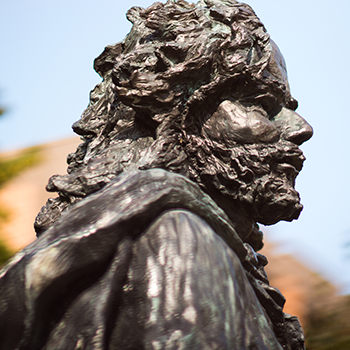
KARL MARX
THE COURSE introduces the student to classical texts of Marx, and, necessarily,
to some of the texts of Hegel that served as Marx’s points of departure. In political philosophy, one studies these
writings to understand the ideologies underpinning communist regimes, and also to comprehend something of the
nature of the modern age that remains with us even after the collapse of the Soviet
bloc.
BOOKS TO BE PURCHASED:
Tucker, The Marx-Engels Reader.
ATTENDANCE: It is necessary to attend all
of the classes to do well in the course.
Repeated absences will have natural consequences, in the sense that they
almost certainly will cause students to do poorly on examinations and to
receive low grades. This will occur
automatically, so the instructor will not have to take role more than
occasionally.
REQUIREMENTS:
Students will prepare the readings listed below for class
discussion. Approximately half the
semester will be spent on selections 1 and 2, the other half on 3-7. The readings are difficult. They cannot be skimmed; understanding will
come only with serious, careful study and reflection. There will be two take-home exams. The first will be on 1-2, the second on 3-7.
GRADING: All papers will be graded on
the basis of the quality of their reasoning.
Good reasoning consists in insightful recognition of problems,
disciplined selection of evidence relevant to the problems, rigorous logic,
mastery of necessary information, and tight organization of written presentations. Students also should strive for correct
grammar and spelling, elegance, and clarity in the papers. Each exam is worth 50% of the course
grade. Effective class participation
could result in upward adjustment of grades.
1. Hegel, excerpts (ditto handout).
2. Marx, "To Make the World Philosophical," "For a
Ruthless Criticism of Everything Existing," "On the Jewish
Question," "Contribution to the Critique of Hegel's Philosophy of
Right: Introduction."
3. Marx, "Economic and Philosophic Manuscripts of 1844."
4. Marx, "Theses on Feuerbach" and "German Ideology,
part I."
5. Marx, "Marx on the History of His Opinions (Preface . . .
)" and "Manifesto of the Communist Party."
6. Marx, "Capital," vol. 1, as excerpted by editor.
7. Marx, "Critique of the Gotha Program," pp. 529-531.
EXAMS, EXAM
INSTRUCTIONS
Each exam will be an essay no longer than
2000 words. The instructor will assign
the question. Alternatively, for
anybody who wishes, the student will select, in consultation with the
instructor, one or more passages from the readings under consideration. The essay has these tasks: (1) Select passages that are relevant to the
same question. State the question, and
explain why it is problematic. (2)
Analyze the reasoning about the question that the texts offer. What are the assumptions? What are the arguments? What difficulties might render the assumptions
and arguments unacceptable, and how do the authors handle them? (3) With regard to what is fundamentally
problematic in the question, explain how the author's arguments guide us or
distract us in our search for truth.
Reason this section especially carefully. It is the part of the essay that best shows
the student's ability to conduct inquiry beyond the mere recitation of texts
and lecture notes.