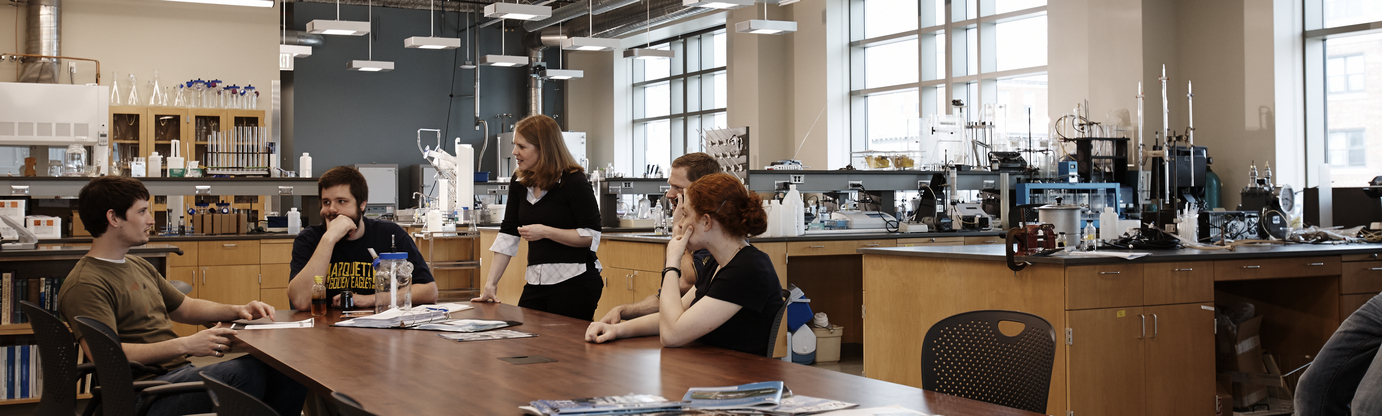
Our Mission:
The mission of the Department of Civil, Construction and Environmental Engineering is to educate students in the Catholic, Jesuit tradition. These students will be competent in their technical fields, appreciate the moral and ethical impact of their professional work and continue their professional development throughout their careers. The students and faculty of the department will advance the state of technical and scientific knowledge through research and provide service to civil and professional communities.
Solving global problems from the heart of Milwaukee
Faculty and students collaborate at Marquette to lead research that discovers new knowledge and advances technical solutions to serve communities around the globe. Our department leads research in construction engineering, environmental and water resources engineering, structural engineering and structural mechanics and transportation engineering and materials.
Explore research highlights
Student organization spotlight: Engineers Without Borders
Marquette’s chapter of Engineers Without Borders is a student organization leading and partnering on community-driven engineering projects in Central and South America. In 2024, Marquette students traveled to the Tzitzil community in Guatemala to contribute to a drinking water system that will provide access to clean water to more than 500 people.
READ MORE ABOUT the organization's RECENT SUCCESS
Discover your potential to Be The Difference
Apply - Undergraduate
plan your visit
pre-college programs
Apply - graduate