
- Schedule an Appointment
- Major/Career Exploration
- Internship/Job Search
- Graduate/Professional School
- Year of Service
- Resume and Cover Letter Writing
-
-
HANDSHAKE

-
CONNECT WITH US



-
PROBLEM WITH THIS WEBPAGE?
Report an accessibility problem
To report another problem, please contact career.center@marquette.edu
Interviewing Guide
In this guide, you will learn what to expect during an interview and how you can practice talking about your skills and experiences. Preparation and practice are the key to interviewing success.
Jump to Sections
- What to Expect at an Interview
- Types of Interviews
- Preparing for the Interview
- AI
- Phone and Virtual Interview Tips
- Day of the Interview
- Common Interview Questions
- Behavioral Based Interview Questions
- Addressing Questions About Salary
- Questions to Ask the Interviewer(s)
- Questions to Assess Inclusion and Belonging
- After the Interview
- Sample Thank You Email
- Back to Career Guides
What to Expect at an Interview
"According to employers, students can best demonstrate their skills during the hiring process by sharing examples and situations when they used their skills to resolve issues or solve problems" (NACE, 2025).
Introductions
Expect a few minutes of conversation to break the ice. Smile, make eye contact, and take a breath. Use this moment to show enthusiasm and professionalism.
Overview of Interview
The interviewer might explain how the interview will go: how long it will take, what topics they'll cover, and other important things to consider. Knowing this plan can help you relax and focus.
Questions About You
This is the main part of the interview. You will be most likely be asked about: Your background and experiences, strengths and skills relevant to the role, examples of teamwork, problem-solving, etc., and why you are interested in the position and organization.
Your Questions for Them
At the end, you will get a chance to ask your own questions. Prepare these beforehand; this shows genuine interest and helps you decide of the role and company would be a good fit.
Next Steps
The interviewer will often explain what comes next: when you can expect to hear back or whether there will be additional interview rounds. You can also ask this as a question.
Types of Interviews
Interviewing can take on different forms: In-person, video, phone, or group. There can also be multiple stages, including:
- Screening: General interview aimed at identifying those who meet the job requirements or who fit well with the organizational culture. It is common for these to occur over the phone.
- Selection: A longer, more thorough interviewed geared toward identifying more qualified candidates, often spanning an entire day. This type is often held on site.
The best interviews feel like conversations. Preparation and practice help you show your best self and make a strong impression.
Preparing for the Interview
- Research the organization:
- Mission and vision
- History
- Types of products/services offered
- Size and organizational structure
- Current industry trends
- Where to research:
- Company's website
- Company's page on LinkedIn
- Current news about organization
- Through your network
- Prepare to discuss how you fit with the role, organization, industry and team:
- Review your skills, abilities, knowledge
- What do you bring to the organization?
- Prepare specific examples:
- How you work with a team
- How you manage conflict
- Your communication skills
- How you've collaborated with others
AI
- Use an AI tool for interview preparation by:
- Generating lists of potential questions based on a job description.
- Running mock interviews to practice your answers.
- Asking for feedback on answers (including how to use the STAR method).
- Copying and pasting the company's "About Us" page or their mission and values, prompting it to help you tailor answers and create questions for the interviewer.
- Still hesitant? Meet with a career counselor for help!
- A Gallup poll of Chief Human Resources Officers (CHROs) revealed that 93% of Fortune 500 companies use AI. You can meet with a career counselor to strategize if you are preparing for an automated interview that might use AI tools to evaluate your performance.
Phone and Virtual Interview Tips
Minimize Distractions
- Take the call in a place where you will be uninterrupted.
- Avoid public, noisy places.
- Book a virtual interview room at the Career Center in the Lemonis Center for Student Success.
Consider Time
- Allocate an additional 30 minutes after the scheduled interview in case it goes long.
- Be prepared to answer phone 10 minutes ahead of schedule.
Utilize Notes
- Use notes you have used to prepare for the interview. Take notes during your interview.
Smile
- Answer the call with your name and a smile. A smile creates a pleasant tone of conversation.
- Introduce yourself: "Good afternoon, this is John Doe speaking."
Dress Up and Sit Up
- Whether it's virtual or over the phone, dress up and sit up.
Get Name and Contact
- Get the name and contact information for your interviewer so you can follow-up.
Day of the Interview
What to Bring
- A professional look
- Copies of your resume
- A notebook or padfolio to take notes
What to Wear
- Dress business professional – first impressions are often the lasting impression.
- Wear clothing that fits appropriately.
- Wear neat, pressed, clean clothing without tears, rips, or hanging threads.
- Wear clean, professional shoes.
- Avoid casual clothing (denim, twill, knit T-shirts), distracting jewelry, and too much cologne or perfume.
When You Arrive
- Arrive early — enter the building 10 minutes before your appointment.
- Treat everyone with respect. Even if they are not formally part of the search committee, they may provide feedback.
- Smile and greet everyone with a firm handshake.
- Make eye contact and use names when introduced.
- Review your prepared stories and answers.
Common Interview Questions
- Tell me about yourself. (Hint: start with present, include a relevant past experience, future goals)
- How and why did you select Marquette University?
- What led you to this major and what courses did you like most/least?
- Tell me what you know about our organization.
- Why are you seeking a position with our company?
- Why should I hire you?
- What do you think a friend or professor who knows you well would describe you?
- What are your skills or strengths?
- In what areas do you need to improve?
- Tell me about your favorite supervisor/ your least favorite supervisor.
- Describe what you think would be an ideal relationship between a supervisor and a supervisee.
- What motivates you to put forth your greatest effort?
- What two or three things are most important to you in your work?
- Why did you choose this particular career field?
- Where do you see yourself in 5 years?
- Is there any additional information you feel would help me in thoroughly evaluating you for this position?
Behavioral Based Questions
Behavioral based interviewers believe that past behavior is an accurate predictor of future behavior. They concentrate many of their questions on situations that candidates have encountered in the past. What they want to hear is an illustration of your behavior.
Examples
- Tell me about a time when you set a goal and were able to achieve it.
- Tell me how you have used critical thinking to find effective solutions to a problem.
- How do you learn about the various strengths of different team members to ensure you are working effectively together?
- For more, see our PFC Interview Questions Guide!
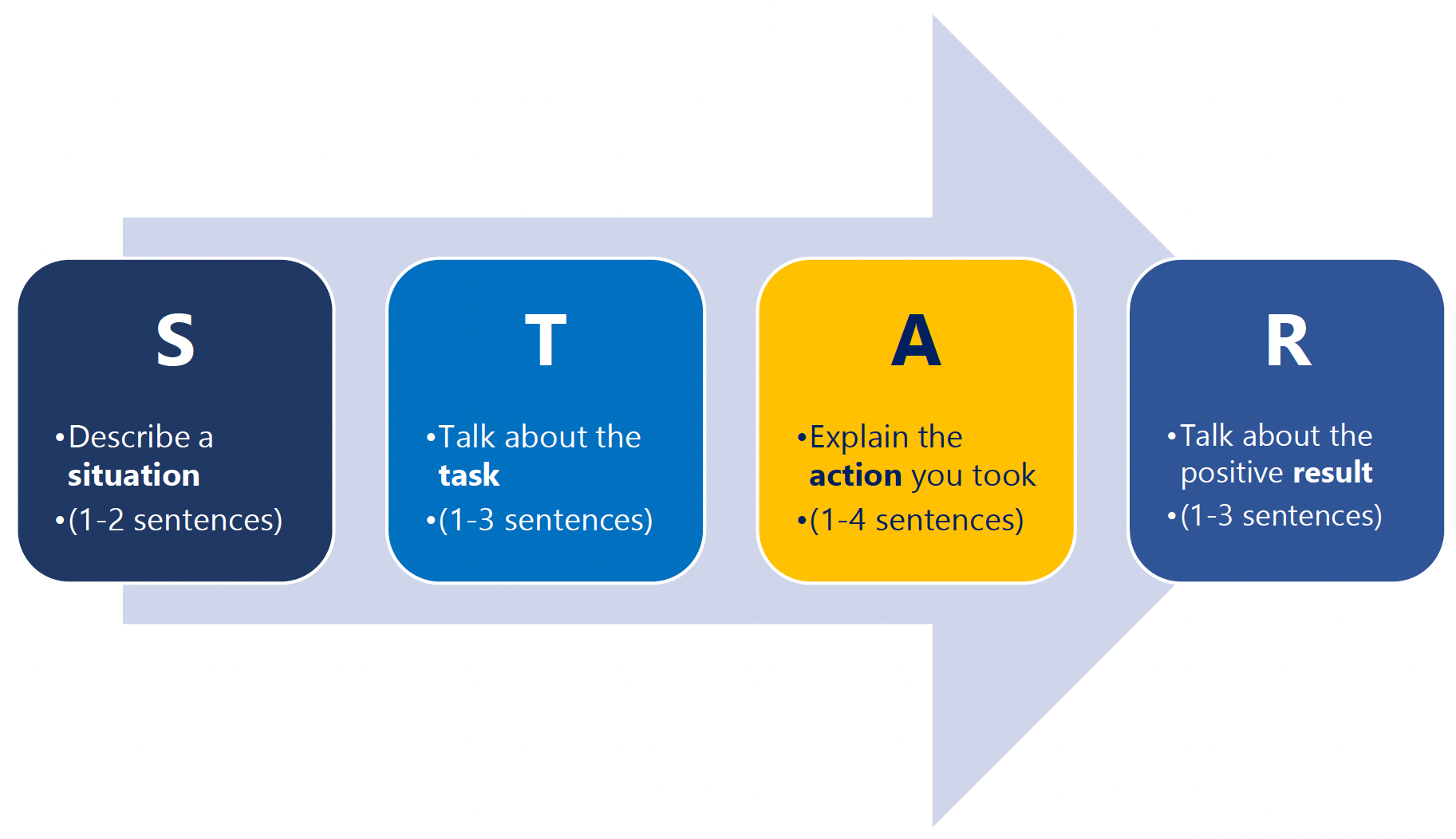
The STAR method is one strategy used to answer these questions:
Example
Question: "Tell me about a time when you have demonstrated initiative."
Answer: "Last summer I worked for a small warehouse. I found out that a large shipment was due in a couple of weeks and that there was very little space available for it (situation). The rear of the warehouse was disorganized and the inventory system was outdated (task), so I came in on a Saturday, figured out how much room was needed, cleaned up the mess in the rear and catalogued it all on new inventory forms (action). When the shipment arrived, the truck just backed in. There was even room to spare and the new inventory system saved us a good deal of time (results)."
Addressing Questions About Salary
Interview questions about compensation such as—What are your salary expectations? — are common. Create a plan for addressing these questions before your first interview. Conduct research on the market salary range for the type of position for which you are applying. Consider the industry, geographical area and your experience level in addition to the job title. Below you will find resources for conducting this research, as well as strategies for answering these questions. See our full guide for salary and negotiation.
Potential Resources For Salary Information
- Salary calculators and sites that report salary ranges
- Information gathered from networking contacts inside the organization or industry
Strategies for Addressing Salary Questions
- You can avoid providing specific numbers and instead focus on:
- Stress your primary interest is finding a role that fits with your skills and interests
- State you want to learn more about the specific responsibilities of the job before giving a number
- State salary is negotiable
- Pressed for more specific information?
- Provide a range based on research.
- For example, "According to my research, someone with my experience can expect to make between $38-45K based on the role and responsibilities.
- Do not mention salary or benefits first. Wait until the employer brings them up.
Questions to Ask the Interviewer(s)
The questions you ask the hiring team are an important element of the interview and demonstrate both your interest in the organization and your initiative. Before the interview, prepare 10-15 questions. Craft questions that are important to you and will help you determine if the organization is a good fit.
Additionally, it is also customary to ask when you can expect to hear back from an interviewer regarding their decision and request the contact information of interviewers. Many times this information is offered, but if it is not, be sure to ask.
Your Questions Might Address:
- Major challenges of the position
- Evaluation and feedback— how & when delivered
- Skills successful employees possess
- Some of the department's ongoing & anticipated special projects
- What employees like best and least working here/why do they stay
- New employee training and professional development opportunities
- Who co-workers and/or supervisors are
- Long-range possibilities for employees in similar positions who consistently perform well
- Culture of the organization (how they "do things," type of behavior that is rewarded, etc.)
- When can I expect to hear from you about your hiring decision?
Questions to Assess Inclusion and Belonging
Below are possible questions to ask either the hiring manager or your contact in human resources. Depending on your comfort level and interests, choose a few questions to ascertain your comfort with the organization's culture. Some questions are more appropriate for new graduates, but those at a more senior level may feel that more direct questions are appropriate and necessary. Marquette University's Office of Inclusion and Belonging can serve as a resource. For topics like requesting accommodations, consult Marquette University's Office of Disability Services.
Here at Marquette, our work in its entirety is guided and informed by our Catholic, Jesuit mission to serve God by serving our students, faculty and staff. Those who are part of our educational mission are asked to build a community of belonging.
Possible Questions
- Can you describe some of your company's core values?
- How would you describe the company's culture?
- You/your company's website mentioned a commitment to diversity. How has the organization demonstrated that commitment?
- What do you do to create an inclusive team environment?
- How do you measure the retention of talent?
- Do you have employee resource groups (ERGs)? If so, would it be possible to speak with the volunteer leaders from them?
- Are there any programs or initiatives in place at your company geared toward promoting inclusion and belonging?
- Are there any employee resources or initiatives you are particularly proud of?
- Tell me about your company's onboarding for new employees.
- Tell me about advancement opportunities within your organization.
- In your opinion, what is the most challenging aspect of working in a diverse environment?
- How do you celebrate diversity of ideas and people?
- What tangible goals does the organization have to create a welcoming environment?
- What are some of the key actions your organization has taken in recent months?
- Who is responsible for ensuring these goals are met?
After the Interview
Always send a thank you note within 24 hours after the interview. This is usually sent out via email. Your email should include:
- Thank interviewer(s) for their time
- Highlight something you enjoyed learning about from the interview
- Additional information you did not have the opportunity to share
- Reiterate interest in position and company
Sample Email
Dear Ms. Jones,
Thank you for meeting with me this morning for the account representative position with the ABC Agency. I was excited about the interview but became even more enthusiastic about the position after learning I would be responsible for building and maintaining my own customer base in your new test market.
As you may recall, I enjoy connecting with and meeting new people. As president of XYZ association I was able to successfully promote our organization's new goals and recruit 17 new members in one semester. As a result, we have one of the most active student organizations on campus. Furthermore, my fundraising internship experience at Children's Place provided practical marketing, fundraising, and communication skills necessary. All should prove to be of value in early productivity within the position.
I look forward to hearing from you by March 18, as you mentioned. If, in the meantime, you have any further questions, please call me at (414) 288-7423.
Sincerely,
First Name Last Name