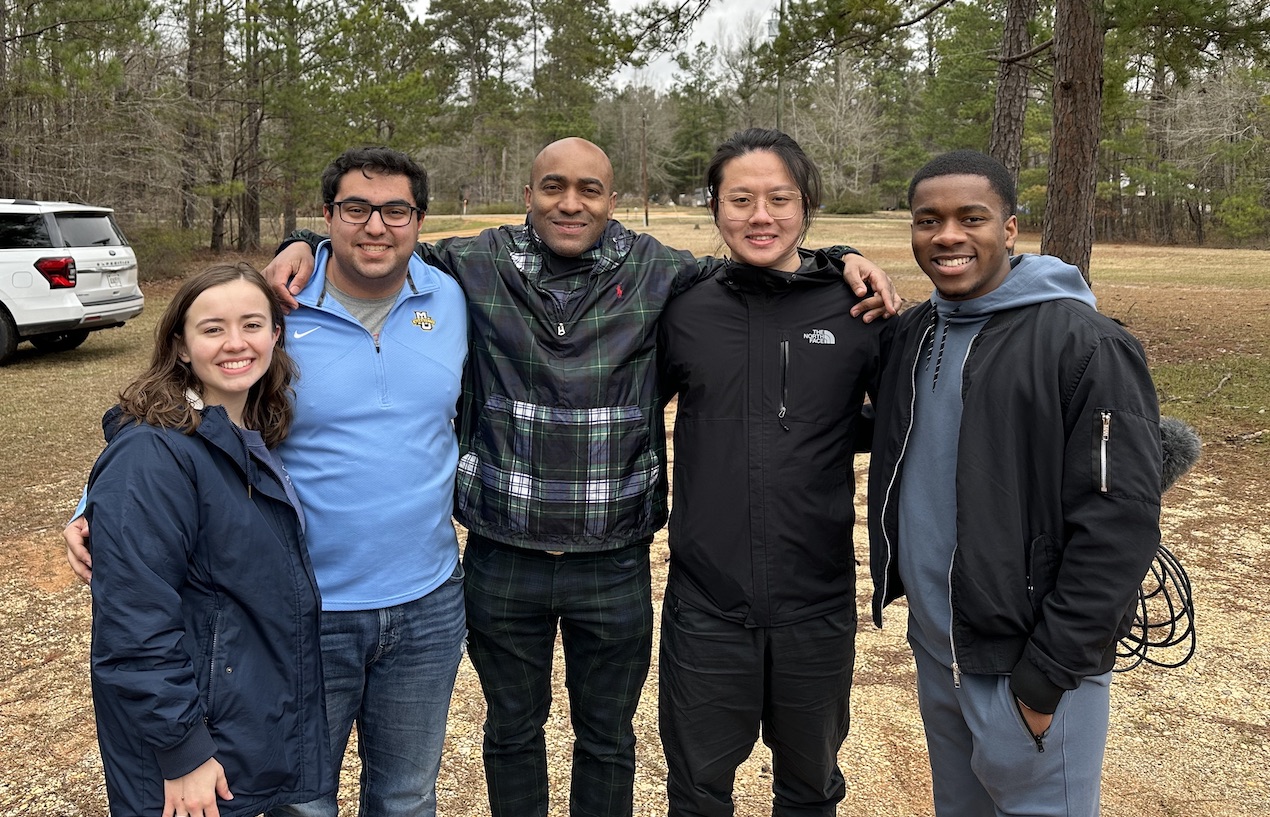
Andrew Amouzou, Ziyang Fu and John Leuzzi assisted 2022-23 O'Brien Fellow Lee Hawkins on a podcast project in partnership with American Public Media (APM). The project examines the racial violence history in Alabama and the implication of that history.
Students took a reporting trip to Alabama in February 2023 along with O'Brien Graduate Program Assistant Vanessa Rivera and O'Brien Director Dave Umhoefer. The team ventured around Alabama, discovering the ties Hawkins and his family have to the state. The APM and O'Brien teams visited The Legacy Museum and The National Memorial for Peace and Justice in Montgomery. Students assisted APM in capturing digital assets at various events, including Hawkins' meetings with family members.
 Lelah Byron and Aimee Galaszewski helped 2021-22 O'Brien Fellow Sarah Carr in her look at obstacles to equity in reading. As a side piece, Galaszewski and Byron dug into the potential of bringing Mississippi's reading reforms to Wisconsin's system with a story in the Milwaukee Journal Sentinel. The team ventured to Jackson, Mississippi in February 2022 to look at the phonics-based instruction happening in Mississippi classrooms.
The story found that a greater emphasis on phonics-based instruction — using the sounds of letters, and combinations of letters, to figure out words — is part of statewide reforms that have dramatically improved reading levels in Mississippi. The reforms, especially coming from a state typically not seen as an innovator, have captured the attention of educators and politicians across the country.
 Maureen Ojiambo and Rachel Ryan assisted 2021-22 O'Brien Fellow Katherine Reynolds Lewis in an examination into how teachers are trained for equity across the nation. In a side project, the team reported on the behavioral challenges and unfinished learning in schools that continued after the pandemic. They talked with school leaders, psychologists and more, publishing three stories on the topic in U.S. News & World Report.
Ryan's reporting revealed that upon returning to in-person instruction, educators saw a variety of problems, from depression and anxiety to fighting and violent behavior. Some schools responded by increasing mental health supports or shortening the school day to include a moment for pause and deep breathing.
In a separate story, Ojiambo found that as a result of pandemic interruptions, many students were experiencing higher amounts of stress. Experts recommended establishing routines for students to create a sense of safety and having students meet with school counselors during lunch. Another story by Ojiambo and Lewis revealed that students are experiencing a significant achievement gap. That gap is even more pronounced for Black, Hispanic and lower-income students.
 Kelli Arseneau and Chris Miller worked with 2020-21 O'Brien Fellow Rick Barrett to investigate the lack of access to high-speed internet in rural and urban areas of Wisconsin. As a part of their Milwaukee Journal Sentinel series, the students talked with people who had left urban living in favor of the Northwoods of Wisconsin. The team found that the pandemic and protests caused an increase in city people seeking permanent refuge in rural or suburban areas, a lifeline for small towns.
For their second story in Milwaukee Journal Sentinel, the students chatted with professionals and people living with the challenges of lack of access to broadband internet. They found that a quarter of the population lacks broadband, or high-speed internet, due to cost, location and population density.
Miller also produced a podcast for the series as a part of a professional project for his graduation. The episodes focus on the status of internet access in the U.S., challenges certain Wisconsin rural areas are facing, and how Milwaukee is addressing the digital divide.
 Sophie Bolich worked with 2019-2020 O'Brien Fellow Katelyn Ferral to reveal years of retaliation by the National Guard against sexual assual survivors. For her story, Bolich interviewed proponents of and survivors who participated in an Austrailian program leading the way for sexual assault reparation. The program provides counseling, confidentiality, reparation payments and apology meetings for survivors. In the story, which ran in the Capital Times, Bolich explored whether this type of program could be applied to the U.S. Guard.
Stories Published:
How one country offered reparations, restorative justice to military sexual assault survivors
 John Steppe worked with 2018-19 O'Brien Fellow Erin Jordan on her series "Treading Water," which investigated states' efforts to address pollution washing from farm fields and industries into the Mississippi River. For his independent byline piece, Steppe interviewed Green Bay residents and researchers from the University of Wisconsin system about how agricultural waste is contaminating drinking water and causing summer dead zones in Green Bay. He also joined Jordan on a trip to Louisiana, and photographed shrimpers whose livelihoods are being threatened by the dead zone on the gulf coast.
Stories Published:
Wisconsin's Green Bay sees dead zones, too
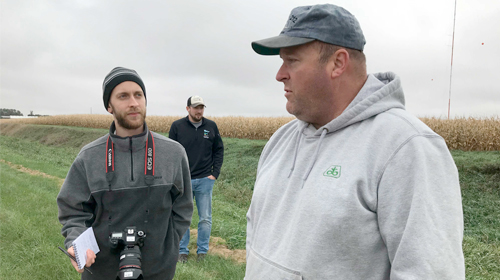
Mark Lisowski worked with 2018-19 O'Brien Fellow Erin Jordan on her series "Treading Water," which investigated states' efforts to address pollution washing from farm fields and industries into the Mississippi River. For his independent byline piece, Lisowski traveled to Minnesota to interview farmers and a government environmental expert about a state law that requires farmers to use buffer strips to prevent agricultural nutrient runoff.
Stories Published:
Many Minnesota farmers disagree with buffer mandate
 Amelia Jones worked with 2017-18 O'Brien Fellow Andy Soth on his "Purple River Project," investigating the change in political affiliation from Democrat to Republican in rural Wisconsin towns along the Mississippi River. She reported, wrote and edited her own stories and received over 8,500 views on her second story about "Pete's Hamburgers Stand," in Prairie Du Chien, Wisconsin.
Stories Published:
Pete's Hamburger Stand
 Rebecca Carballo spent her last year at Marquette working with 2017-18 O'Brien Fellow Gary Harki on his project about mentally ill prisoners in Virginia prisons. Rebecca went on a reporting trip to Virginia, and she received her own byline for her reporting for The Virginian-Pilot.
Stories Published:
For understaffed Hampton Roads Regional Jail, help could be on the way
 Maggie Glynn worked alongside Wisconsin Public Television reporter Andy Soth in her last year at Marquette, reporting on his project the "Purple River Project," investigating the change in political affiliation from Democrat to Republican in rural Wisconsin towns along the Mississippi River. She covered the Laura Ingalls Wilder days in Pepin, Wisconsin.
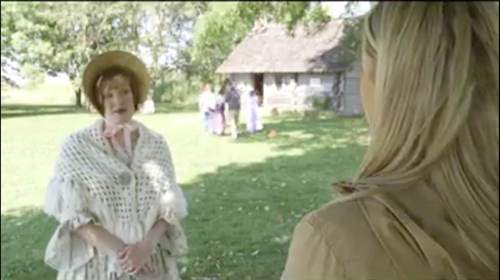
Stories Published:
Little House Wayside Cabin
 Alexandria Bursiek spent her last year at Marquette working with 2017-18 O'Brien Fellow Gary Harki from the Virginian Pilot on his project about the treatment of mentally ill prisoners in Virginia prisons. Her reporting work earned her a byline for the Virginian-Pilot about how Virginia's mental health care system is "chaotic" and must be addressed.
Stories Published:
Virginia's mental health care system is "chaotic" and must be addressed, says Sen. Deeds
 Ryan Patterson spent his senior year working with 2016-17 Fellow Mark Johnson from the Milwaukee Journal Sentinel on his project, "Outbreak." Patterson even traveled to Brazil with Johnson to report on climate change and its effect on the spread of diseases. He received a co-byline in the Journal Sentinel for his reporting.
Stories Published:
Infectious disease collides with changing climate
Devi Shastri spent her senior year at Marquette working with 2016-17 O'Brien Fellow and Pulitzer-Prize winning Milwaukee Journal Sentinel journalist Mark Johnson on his series "Outbreak." She received a byline credit for her solo reporting trip to the Florida Keys about the debate on genetically engineered mosquitoes.
Stories Published:
Pathway to Peril
 Wyatt Massey worked with 2015-16 Fellow and Baltimore Sun Reporter Justin George on his series "Shoot to Kill," investigating why Baltimore is the most lethal city in America. He received end credit on the five-part series published in the Baltimore Sun. Massey also was chosen as the Baltimore Sun summer intern in 2016.
Stories Published:
Shoot to Kill Chapter 1

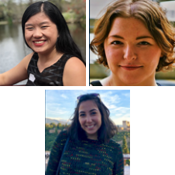
 O’Brien Fellowship interns Reyna Galvez, Mia Thurow, and Sofie Hanarahan gained hands-on investigative journalism experience while working alongside O’Brien Fellow Eddie Allen. Throughout the year, the interns supported Allen’s reporting process, helping research stories, conduct interviews, and develop the skills needed to tell impactful stories.
 Joseph Schamber’s experience as a 2025-26 O’Brien Fellowship intern helped launch the next step in his journalism career. Working alongside O’Brien Fellow Alison Dirr, Schamber gained firsthand experience in public service reporting while contributing research and reporting to Dirr’s investigation into Milwaukee’s ongoing challenges with lead poisoning. Through the fellowship, Schamber developed skills in interviewing, investigative research, and community-focused storytelling — experience that helped prepare him for his internship with the Milwaukee Journal Sentinel. His journey reflects the mission of the O’Brien Fellowship: providing student journalists with meaningful opportunities to work alongside professional reporters and build the foundation for impactful careers in journalism.
 Sarah Lipo and Rachel Ryan worked with 2020-21 O'Brien Fellow Ashley Nguyen to investigate maternal health issues across the U.S. For their
 Sydney Czyzon worked with 2019-2020 O'Brien Fellow Katelyn Ferral on her investigation into the National Guard's handling of sexual assault allegations. Czyzon reviewed documents and interviewed National Guard members and various attorneys about the Guard's confusing records system. The story in
  Zo
Zo Sarah Hauer worked alongside Pulitzer-Prize winning Milwaukee Journal Sentinel reporter Dave Umhoefer on his project "Act 10," investigating the uproar Act 10 caused in Wisconsin schools. She received three co-bylines for her work with the yearlong project and was the recipient of the Journal Sentinel O'Brien Fellowship summer internship for 2017.