Events and Reading Groups
The 87th Aquinas Lecture
Oppression and the Politics of the Human
Friday, October 2, 2026
Centennial Room (AMU 227)
Dr. Serene J. Khader - Jay Newman Chair in Philosophy of Culture at Brooklyn College Professor of Philosophy and Women's and Gender Studies at the CUNY Graduate Center
When we speak of being human, we almost do so with great moral hope. We study the humanities in college partly in the hope that understanding our shared condition will help us build a more inclusive, empathetic, and kind world. The idea that being a human rather than a citizen or a compatriot gave people rights was in many ways revolutionary when it was introduced. The human rights regime—grounded in the notion that states had obligations to treat every human being as possessed of value—became widely accepted only in the twentieth century. The ascent of human as a moral category was deeply related to a collective realization during and after the two World Wars that the fates of human beings were intertwined. In that moment, the ideal of the human seemed to embody a recognition that in some deep sense we are all in it together. Yet, reception of the ideal of the human has not been altogether rosy.
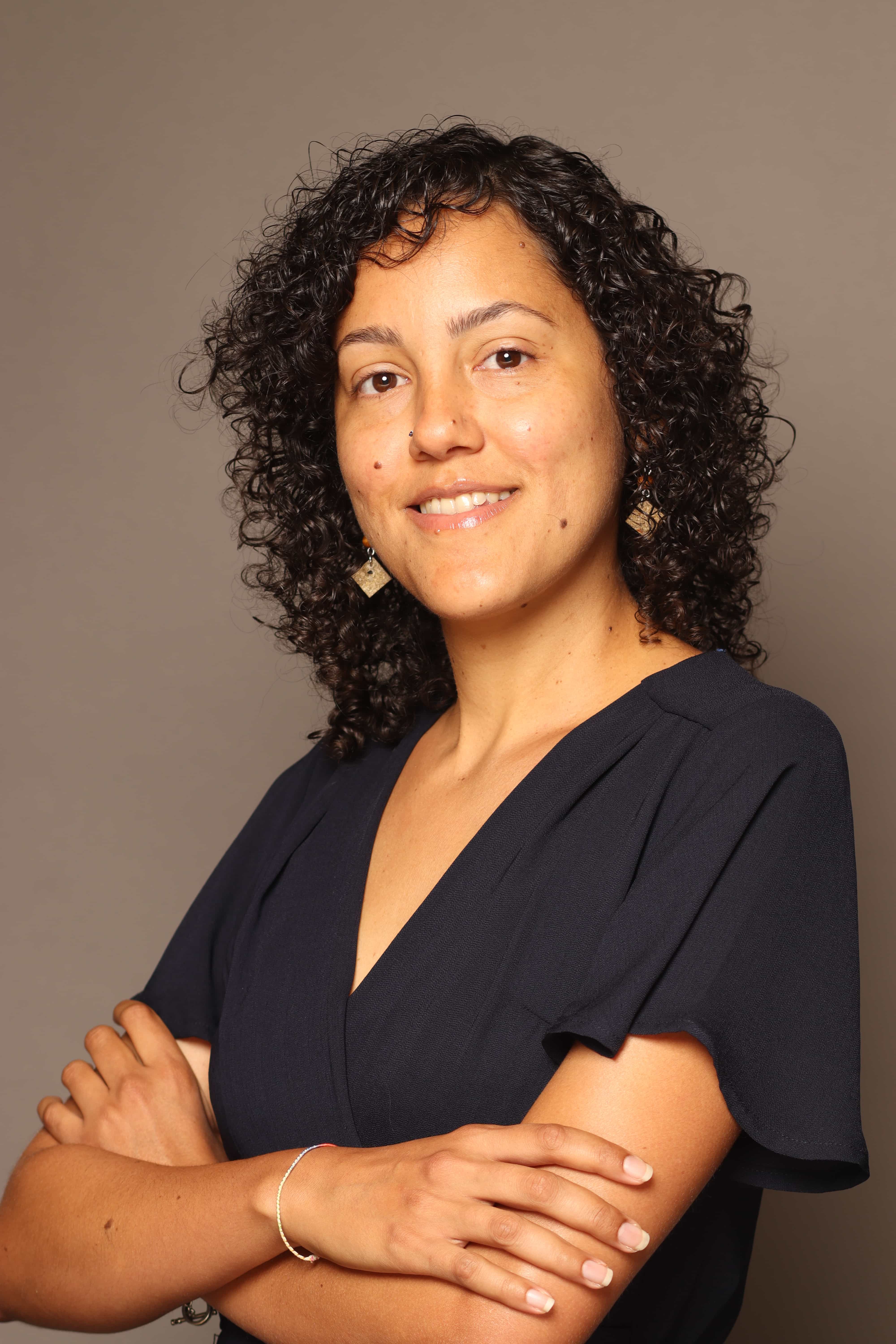
Professor Serene J. Khader is a writer, philosopher and feminist theorist. Her new book, Faux Feminism: Why We Fall for White Feminism and How We Can Stop (Beacon 2024) won the North American Society for Social Philosophy's 2025 book prize and has been called "a page-turner" by "Chandra Talpade Mohanty, "well-researched, compellingly written, and passionately argued,“ by Kirkus reviews, and "a marvelous and essential read" by Rafia Zakaria.
Professor Khader’s areas of research within philosophy include ethics and moral psychology, political philosophy, and feminist philosophy. She also work in the interdisciplinary fields of development ethics and global, decolonial and postcolonial feminisms. Some of the transnational practices she has analyzed include microcredit, household divisions of labor, and commercial gestational surrogacy.
Colloquiums
"Love, Politics, and Peoples: Questioning Love's Role in Politics"
Dr. Eyo Ewara - Associate Professor of Philosophy, Loyola University Chicago
Friday, September 18th at 3:30
Marquette Hall Room 105
Is love the answer to our political ills? An air of pessimism increasingly surrounds politics in America and elsewhere. The rise of ethnonationalisms and seemingly unbridgeable sectarianism; the loss of confidence in public institutions’ ability to counterbalance personal or group interest; the loss of faith in social progress and the seeming rollback of rights and opportunities; all of these characterize our current moment in ways that have created a hunger for alternative political approaches. In the face of these challenges, several thinkers and politicians have turned to the idea that love is the key to solving contemporary conflicts. Seeming to promise a less aggressive, more connection-based, more creative and more open-ended affective basis from which to engage with other people and with the problems that we share, a “politics of love” can be deeply appealing to those hoping for a different attitude through which to approach the problems of politics. That said, this talk calls such approaches into question. Drawing on thinkers like Sara Ahmed, James Baldwin, and Hannah Arendt, it points to how, while love can surely be the basis for openness, connection and care, it can also give rise to harmful idealizations, inequality and violence. It argues for the importance of taking a more ambivalent approach to conceptualizing love and, consequently, to love's role in political life.
No Islands, No Masters: Aristotle and the Activity of Citizenship
Adriel M. Trott, PhD - Professor of Philosophy, Andrew T. and Anne Ford Chair in the Liberal Arts, Wabash College
Friday, October 9th at 3:30
Marquette Hall Room 105
In a time of ethnonationalist appeals to lineage and land, Aristotle is a fruitful resource for an alternative basis for citizenship. He rejects blood and soil, ancestry and shared land, as the grounds for political belonging. In doing so, he criticizes both the classical Periclean Athenian approach to citizenship, which tracks citizenship through parentage, and the Athenian origin story of autochthony, that the first Athenians sprang from the earth. By contrast, Aristotle offers a conception of citizenship rooted in activity, specifically the activity of considering the question not simply of what is pleasant and painful, but of what is beneficial and harmful, just and unjust. Aristotle thus appears to be a counterpoint to those who would paint Greek politics with a broadbrush for its autochthonous commitments, which critics credit for justifying the exclusion of women and immigrants and thereby enabling and grounding contemporary ethnonationalist discourse. Rather than enabling xenophobic nativism, Aristotle’s activity-based conception of citizenship offers resources for expanding possibilities for political belonging. One might nevertheless worry that Aristotle’s account of ethical and political activity seems self-grounding in a way that makes one an island since one seems to be the source of one’s action in the same way that nature is that which moves from within itself to fulfill its end and thus appears to arise from itself, autochthonously. Dr. Trott argues that Aristotle’s ethical and political theory resists this individualistic self-grounding because the citizens are both formative of and dependent on others and the community. That answer, however, might appear to make action dependent on another, in ways that establish relations of mastery and submission between citizens. Dr. Trott argues that Aristotle’s account of the rule of the old illustrates the dialectic of how community forms and is formed by its citizens, who are neither islands nor subject to masters in political life.
Reading Groups
Classical German Philosophy Reading Group
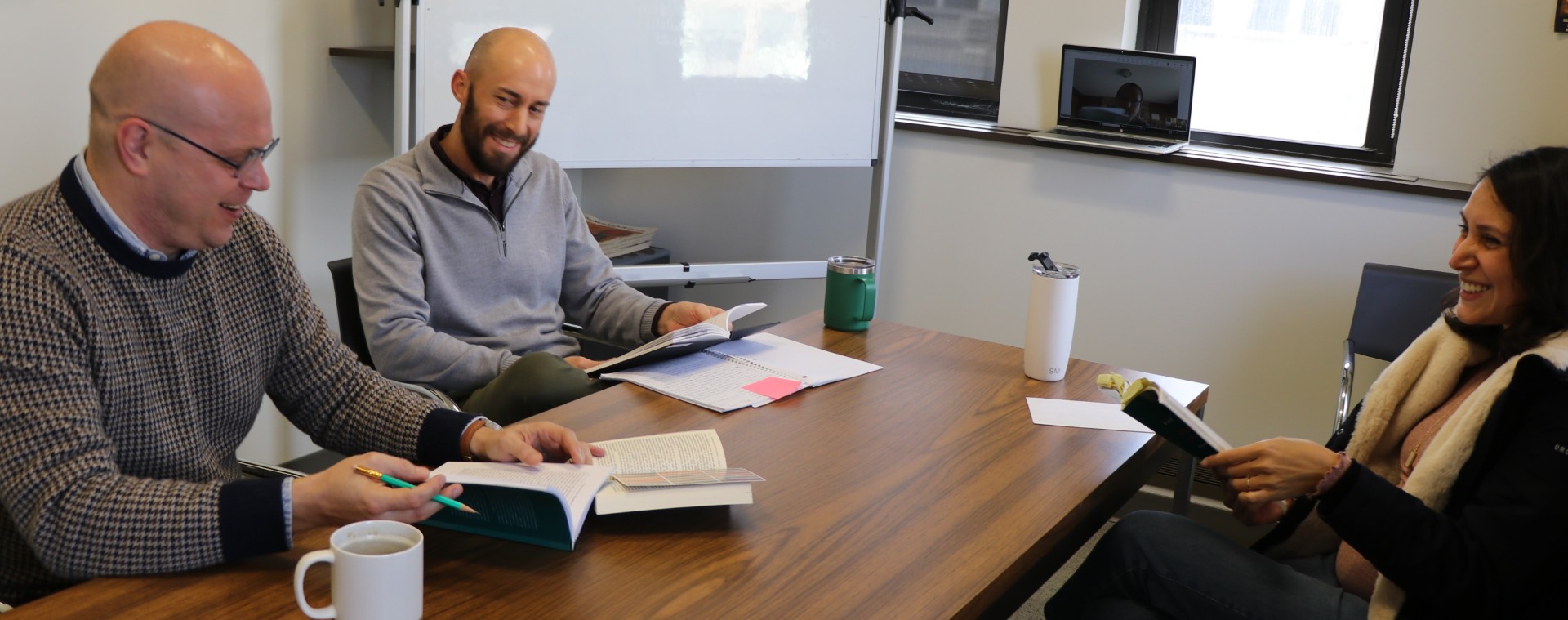
Meets Thursdays, 12pm-1pm, in MH418. In Fall 25, reading Kant's Groundwork for the Metaphysics of Morals. For more information, contact Michael Olson.
Greek Philosophy Reading Group
Meets Tuesdays, 9am, in person (MH102) and online. Email Owen Goldin for details.
Indigenous Philosophy Reading Group
Meets every Thursday, 3:30pm, either in person (MH102) or via Teams. Email Caden Page for the Teams link.
Gloria Anzaldúa Reading Group
Meets every other week on Tuesdays, 10am-11am, in the downstairs lounge space, with virtual options available upon request. Contact Emily Lange for details.
Marquette Midwest Seminar in Ancient and Medieval Philosophy
For more information, visit the seminar website or contact Owen Goldin.
Grad Student Peer Workshop
Usually meets every other Friday, 3:30pm-4:30pm. For more information, contact Emily Lange.